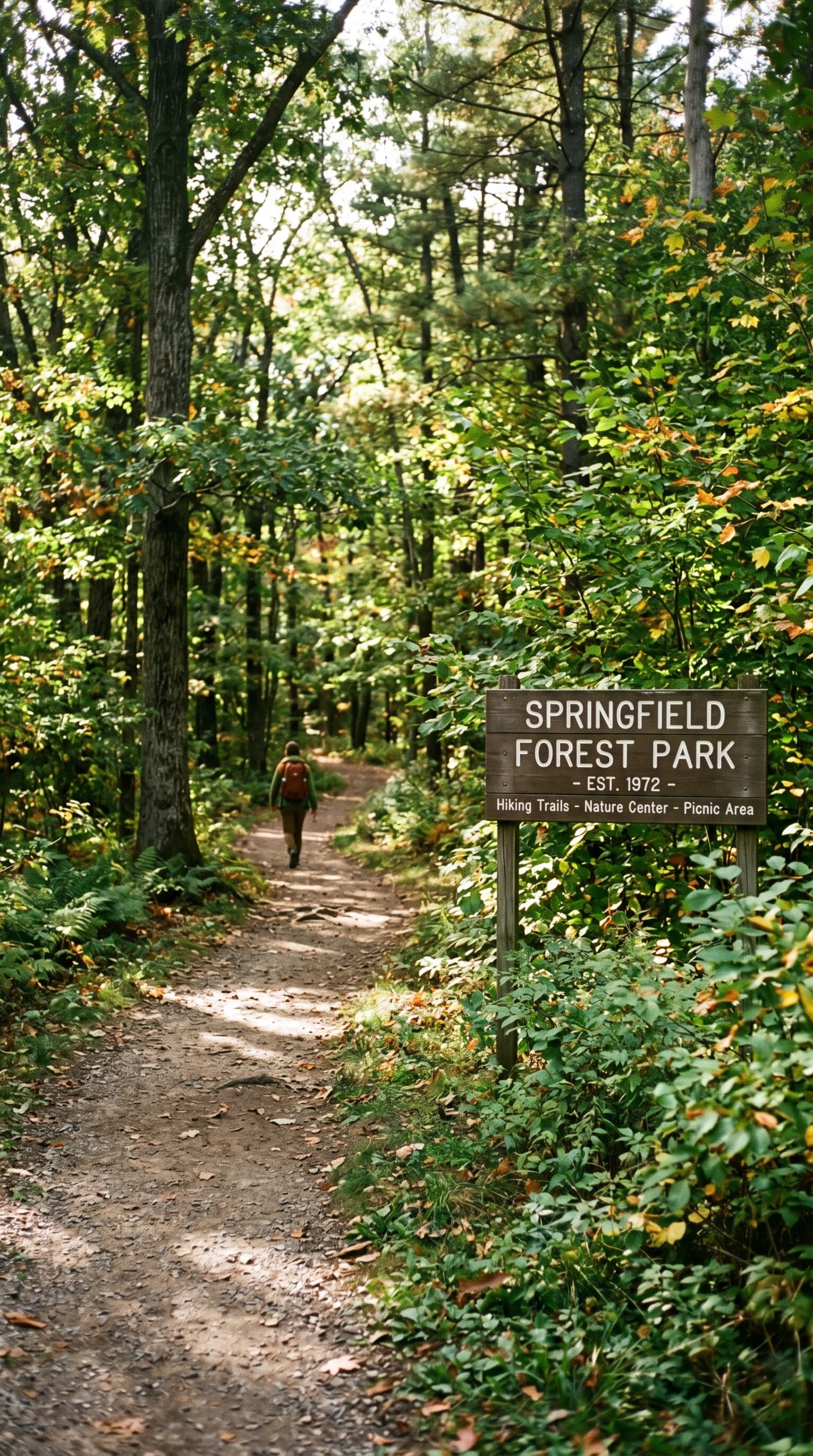
Forest Park is the 735 acres Olmsted gave Springfield
An Olmsted firm plan, a working zoo, a rose garden, and the holiday drive through that takes Springfield to half a million visitors every December.
If you have ever entered Forest Park from Sumner Avenue, you have walked into a piece of American landscape history. The Olmsted firm, the same New York office responsible for Central Park, drew the plan in the 1890s. Springfield approved the layout in 1894 and proceeded to build, over the next thirty years, what is one of the largest urban parks in the United States.
The bones of that plan still hold. The carriage roads now carry runners and cyclists, but they trace the same lines. The rose garden where wedding parties pose every June was planted into a clearing the original surveyors marked. The pond where neighborhood kids feed ducks is the same pond Olmsted's draftsmen drew. Forest Park has been remade many times in its surfaces, but the underlying geometry has never moved.
What sits inside the park today is closer to a small civic ecosystem than to a single recreational space. The Zoo at Forest Park is small enough to walk in an hour and serious enough to participate in national species conservation programs. The Barney Estate, a 1900s mansion at the southern edge of the park, hosts community events and weddings. The Forest Park Pickleball courts have, over the past two seasons, become the most reliable place in Springfield to find a four o'clock game on a Tuesday.
The headline event for the park is Bright Nights, a drive through holiday light display that runs from late November through early January. Bright Nights is now in its third decade. The display is operated by the Spirit of Springfield, a nonprofit that has shaped the city's largest civic celebrations for years. On peak nights the queue stretches back to the State Street entrance, and the proceeds fund free public events the rest of the year.
For the businesses that ring the park, Forest Park is the largest reliable foot traffic generator in the city outside of MGM Springfield. Sumner Avenue, Belmont Avenue, and Dickinson Street all draw on park visitors. Restaurants build summer menus around concert series in the park. Boutique retail times Saturday hours to family park visits. The park is part of the local supply chain whether the businesses say so or not.
The deeper point is that Forest Park is a public asset that earns its keep. It costs Springfield real money to maintain, and it returns real money in the form of a neighborhood whose households stay because of it. The Olmsted plan does not require the city to do much except not interfere with what the design already intended.
Places mentioned
Forest Park, the city's 735 acres of green
Frederick Law Olmsted's firm laid out Forest Park in the 1890s, and the result is one of the largest urban parks in the country.
Family Saturdays in Springfield
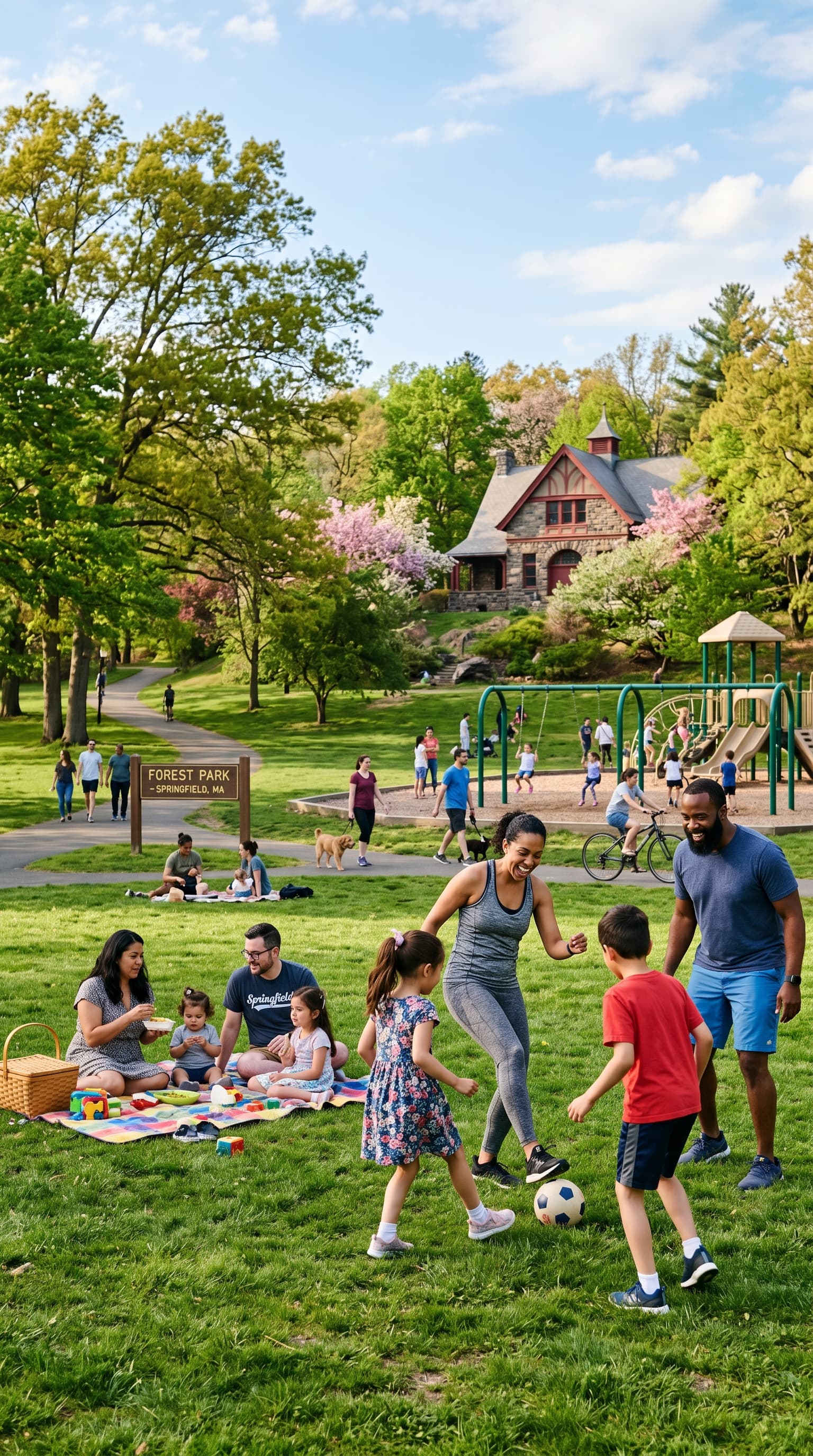
Forest Park has the swings and the rose garden. Van Horn has the playground that gets busy by 9 a.m. Sixteen Acres has the soccer fields. Saturdays stay outside.
Springfield's city neighborhoods
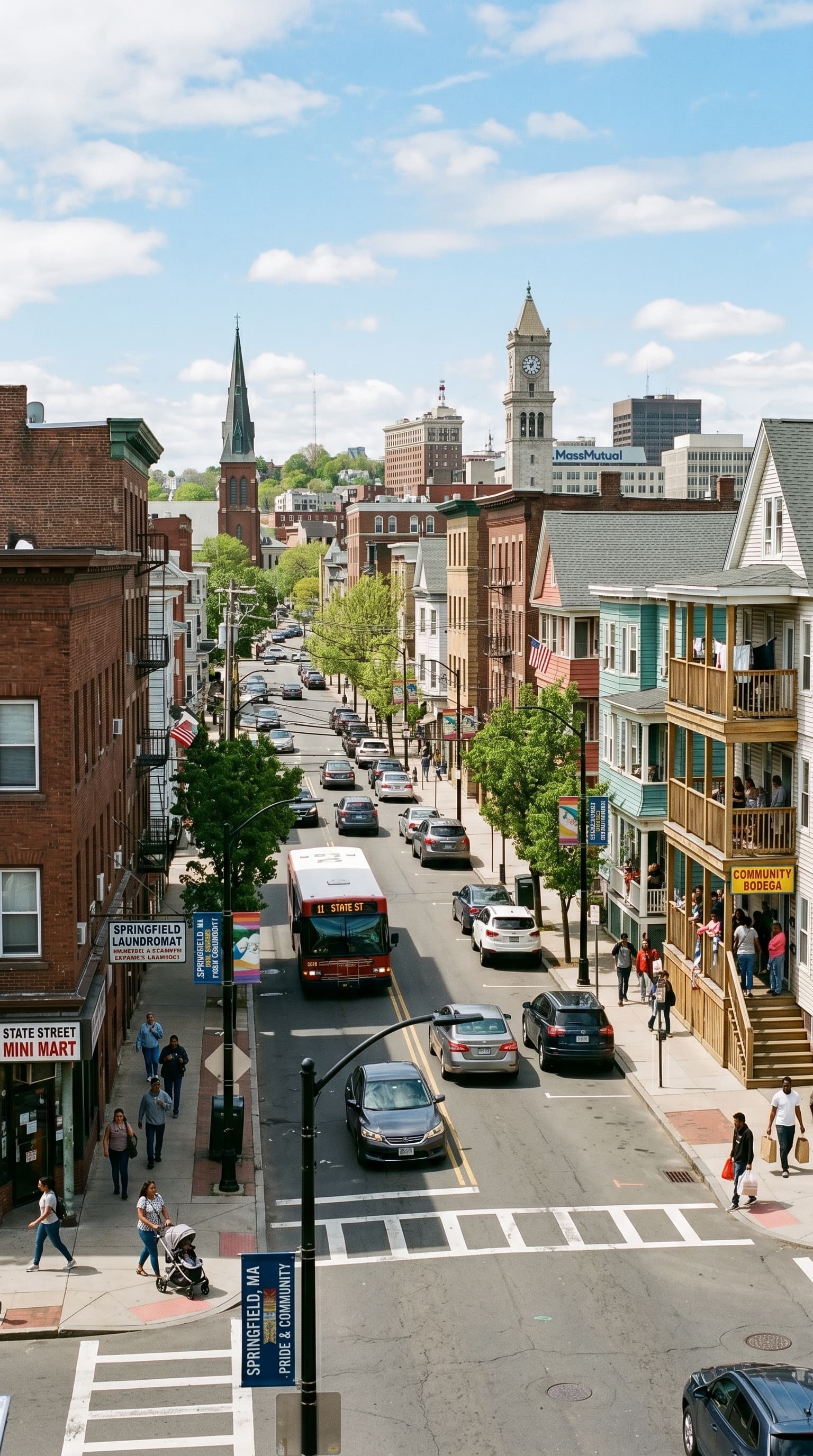
McKnight, Bay, Old Hill, the South End, the North End, Brightwood, Memorial Square, Liberty Heights. The city is a stack of distinct places.
Keep reading
Bright Nights at Forest Park, the city's quietest tradition
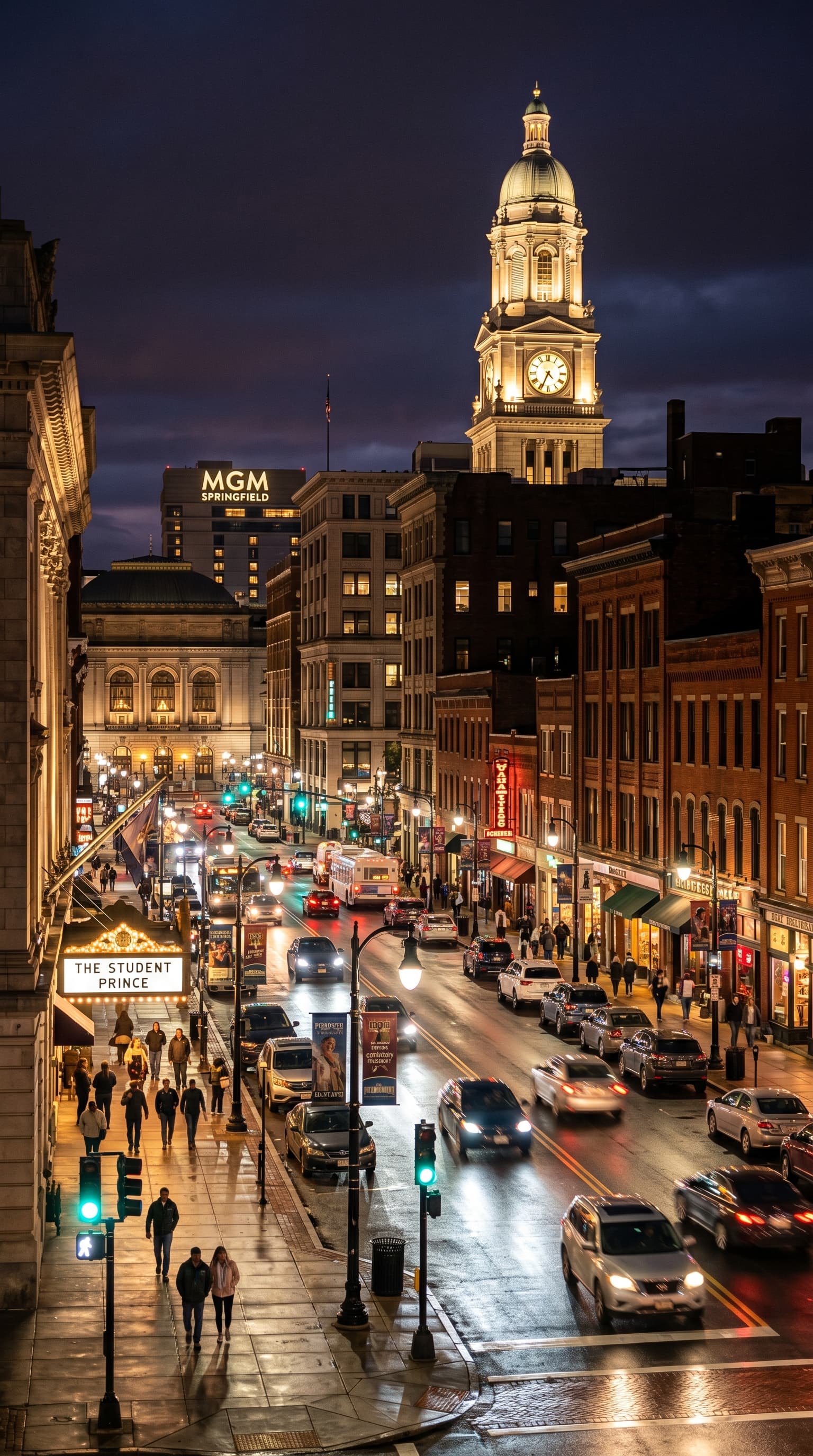
Bright Nights is a drive through holiday lights display at Forest Park. It runs from late November through early January each year and funds free public events through the Spirit of Springfield.
The Big E, West Springfield's 17 day fall obsession
The Eastern States Exposition is a 17 day fair that runs every September in West Springfield. It hosts the six New England state buildings and pulls more than a million visitors each year.